There is a unique kind of magic that happens when a text-based AI roleplay truly clicks. You lose track of time, the real world fades away, and you become completely absorbed in the fictional universe you have co-created. Whether you are navigating a high-stakes cyberpunk thriller, a slow-burn romantic fantasy, or a cozy slice-of-life drama, the illusion of reality is the most important element of the experience. You are no longer chatting with an algorithm; you are speaking directly to a living, breathing character.
But then, in a fraction of a second, the spell is broken. The illusion shatters, and you are jarringly reminded that you are just staring at a screen, typing text into a language model. This sudden loss of immersion is the most frustrating experience for any avid AI roleplayer. If you have ever wondered exactly what breaks AI immersion and why it happens, you are not alone. It is a universal pain point in the digital roleplay community.
In this guide, we are going to break down the top five things that destroy your roleplay immersion. More importantly, we will explore practical ways to fix these issues so you can stay lost in your story without the sudden whiplash of reality.
1. The Sudden Out-of-Character (OOC) Whiplash
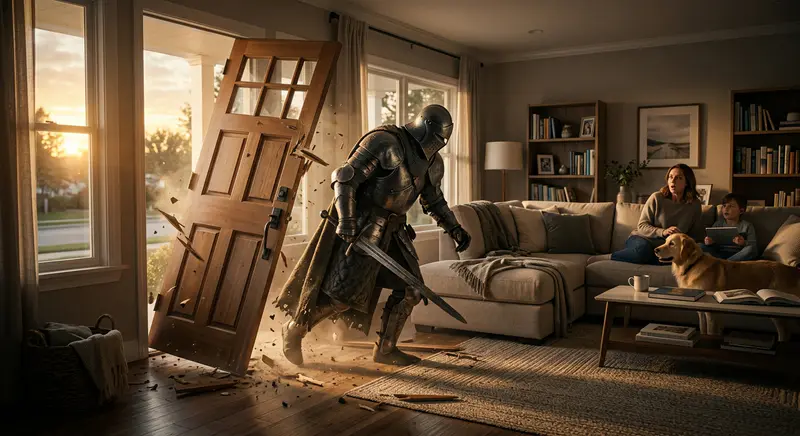
Imagine you are deep into a heartwarming, emotional scene. It is a quiet family drama, the dialogue is soft, the fireplace is crackling, and your character is having a touching heart-to-heart with their sibling. Suddenly, the AI responds: He kicks the front door off its hinges, draws a laser blaster, and scans the room for hostiles. Wait, what? Where did that come from?
This is the dreaded Out-Of-Character (OOC) whiplash. It happens when the AI suddenly forgets the established tone, setting, or personality of the character it is supposed to be playing. Sometimes a shy, introverted character suddenly becomes dangerously aggressive; other times, a medieval knight starts using modern corporate buzzwords. This abrupt shift completely derails the narrative and forces you to pause, delete the message, and try to wrangle the bot back to reality.
OOC behavior usually occurs because the AI's context window gets muddled, or the model's base training overrides the specific character prompt. To fix this on standard platforms, you often have to constantly remind the AI of its personality in your own prompts, inserting hidden cues like (OOC reminder: Character is peaceful and calm) into your text. However, this meta-text itself breaks immersion.
2. The Preachy Safety Filter Lecture
AI roleplay thrives on conflict, drama, and complex character dynamics. Sometimes, stories venture into angsty, dark, or morally gray territory. There is nothing quite as immersion-breaking as having a tense standoff with a villainous character, only to have the AI suddenly break character to deliver a sterile, corporate-sounding moral lecture.
The dreaded As an AI language model, I cannot promote... or a sudden, overly sanitized response where the villain apologizes and suggests talking things out over tea, completely ruins the atmosphere. Overzealous safety filters treat fictional roleplay as real-world intent. When the system steps in to scold you or artificially force a positive, family-friendly resolution onto a gritty storyline, the suspension of disbelief is instantly destroyed.
While safety is important, context is everything. Fiction requires villains to act like villains and tense situations to actually be tense. Dealing with these preachy filters usually involves creatively rephrasing your prompts or using euphemisms, but having to tip-toe around an AI's arbitrary censorship rules is a surefire way to kill your creative flow.
3. Intrusive Chat UI and Sudden Advertisements
Immersion isn't just about the words on the screen; it is about the environment in which you are reading them. When you are reading a gripping novel, the book doesn't suddenly flash a neon banner ad across the page. Unfortunately, many AI roleplay platforms treat their interfaces like standard apps rather than immersive storytelling canvases.
Nothing pulls you out of a fantasy world faster than a sudden pop-up asking you to buy more tokens, a flashy banner ad for a mobile game appearing right below your chat box, or a cluttered, noisy user interface packed with unnecessary buttons and notifications. These aggressive UI intrusions act as a constant visual anchor tying you to the real world.

4. The Frustrating Amnesia Loop
Consistency is the backbone of any good story. If a character tells you their favorite color is blue in chapter one, it shouldn't suddenly be red in chapter three. In AI roleplay, the Amnesia Loop is a massive immersion killer. You might spend an hour meticulously planning a heist, assigning roles, and gathering gear, only for the AI to ask, So, what are we doing today? in the very next message.
This happens because language models have a limited memory, known as a context window. Once a conversation gets too long, the earliest messages start to fall out of the AI's active memory. It forgets your name, your relationship status, the setting of the room, or even major plot points that just occurred. Having to repeatedly remind your fictional partner who you are and where you are makes you feel less like a co-author and more like a caretaker for a forgetful machine.
5. Repetitive Phrasing and Robotic Quirks
Over time, language models develop recognizable linguistic tics. If you have roleplayed enough, you know exactly what this looks like. Characters constantly feeling a shiver down their spine, eyes darkening with unreadable emotion, or summarizing every single interaction as a tapestry of intertwined destinies. When the AI starts looping the same phrases, sentence structures, or ending every single reply with a rhetorical question (Are you ready for what comes next?), it stops sounding like a character and starts sounding like a predictable algorithm.
This repetition strips the character of its unique voice. The illusion of a living persona fades, replaced by the stark realization that you are dealing with predictive text trying to guess the most statistically likely next word.
How to Protect Your Immersion (And the PopVid.ai Solution)
Fixing these immersion-breaking issues manually requires a lot of work. Roleplayers often resort to maintaining extensive lorebooks, constantly editing the AI's responses to train it, and fighting against the platform's UI. But you shouldn't have to be a prompt engineer just to enjoy a good story.
This is where PopVid.ai steps in. Designed specifically with deep immersion in mind, PopVid.ai tackles the root causes of these disruptions to offer a seamless, uninterrupted roleplay experience.
- Focus Mode for an Undisturbed Interface: PopVid.ai understands that the UI should fade into the background. With its dedicated Focus Mode, you can strip away the clutter. No sudden ads, no aggressive token pop-ups, and no distracting banners. It is just you, the character, and the story, presented in a clean, cinematic environment.
- Deep Character Consistency: To combat OOC whiplash and the amnesia loop, PopVid.ai utilizes advanced memory handling and deep character alignment. Characters are strictly bound to their core personas. A cozy family drama stays a family drama, and the AI remembers the vital details of your relationship and setting without needing constant meta-reminders.
- Nuanced, Context-Aware Storytelling: Instead of relying on heavy-handed, preachy safety filters that ruin the narrative, PopVid.ai is tuned to understand the context of fictional roleplay. It allows for complex, dramatic, and emotionally rich storytelling without abruptly breaking the fourth wall to deliver a moral lecture, keeping the narrative authentic to the genre you chose.
Immersion is a fragile thing. It takes time to build and only a second to break. By recognizing the factors that disrupt your experience—whether it is an out-of-character shift, a preachy filter, or an intrusive ad—you can seek out platforms that respect your narrative. With tools like PopVid.ai prioritizing your focus and character consistency, you can finally put away the prompt engineering tricks and get back to doing what you came here to do: losing yourself in an incredible story.