You have probably been there before. You are deeply invested in an incredible storyline with your favorite AI companion. The dialogue is snappy, the emotional stakes are incredibly high, and the world-building feels entirely unique to your choices. But after hours of scrolling through endless paragraphs, a subtle exhaustion begins to set in. Text-only roleplay relies entirely on your mind to paint every detail of the scene. Over time, that cognitive load adds up. Sometimes, you do not just want to read about the smirk on your character's face or the neon-lit cyberpunk alleyway they just stepped into. You actually want to see it. This growing desire for visual feedback is precisely why the demand for visual ai roleplay with images is skyrocketing across the digital landscape, fundamentally changing how we interact with our digital companions.
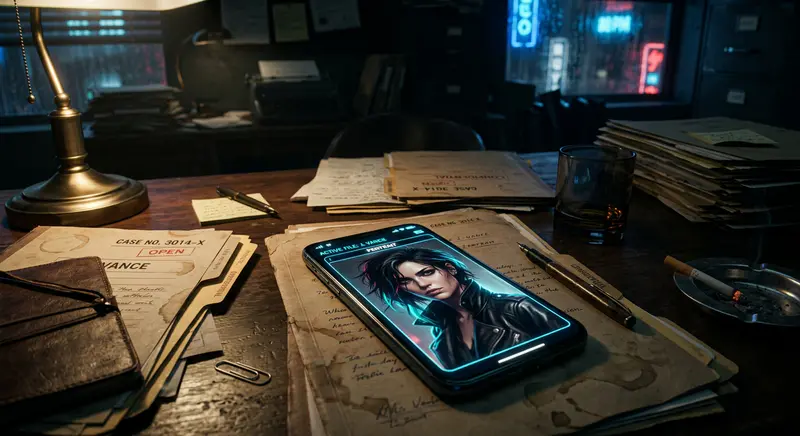
The Wall of Text: Why Traditional AI Roleplay Sometimes Falls Short
For years, text-based platforms have been the undisputed kings of the AI roleplay space. They offer infinite freedom, allowing you to explore any scenario, universe, or dynamic you can dream up. However, this limitless freedom comes with inherent limitations. The most prominent issue is what many in the community call imagination fatigue. When you are responsible for visualizing every single detail, from the exact hue of the lighting in a medieval tavern to the intricate design of a sci-fi spacesuit, your brain is doing double duty. You are acting as both the participant and the real-time renderer of the world.
Furthermore, text formats often struggle to convey spatial awareness and subtle physical nuances. An AI might describe a character looking away thoughtfully, but the emotional impact of reading that action pales in comparison to actually witnessing the shift in their eyes. Without visual anchors, it is easy to lose track of the setting or forget who is standing where. Over time, the environment can become a blurry, abstract void where only floating voices exist. This is where the magic of visual immersion becomes not just a luxury, but a necessity for long-term engagement in interactive storytelling.
Enter Visual AI Roleplay: A Multi-Sensory Evolution
Visual ai roleplay with images bridges the gap between traditional text adventures and fully realized video games. By integrating dynamic visual elements into the narrative stream, this next-generation format transforms a standard chat interface into a living, breathing visual novel. Imagine typing a command to explore a haunted gothic mansion, and instead of merely reading about the cobwebs and peeling wallpaper, a high-resolution, atmospheric image of the foyer appears right in your chat window.
This multi-sensory approach profoundly alters the pacing and emotional resonance of the roleplay. Visuals provide immediate context. When an image sets the scene, the text no longer has to carry the heavy burden of environmental description. Instead, the narrative can focus entirely on character dialogue, internal monologues, and crucial plot developments. This creates a much smoother, more cinematic flow that keeps you hooked for longer periods. It also deepens the emotional connection you have with your AI partner. Seeing their facial expressions change in response to your dialogue choices triggers a much more visceral psychological response than text alone.
How Real-Time Imagery Transforms the Experience
The addition of images to AI roleplay does more than just make the screen look pretty. It fundamentally changes the mechanics of how stories are told and experienced. First and foremost, it establishes a shared reality between you and the AI. When a visual representation of a scene is generated, it serves as a concrete anchor point. Both you and the AI are now operating within a defined space, which drastically reduces contradictory descriptions and helps maintain a consistent narrative continuity.
Secondly, visual integration allows for much richer world-building. In a standard text setting, introducing a complex new location requires paragraphs of exposition that can slow down the pacing of the story. With visual AI roleplay, a single, carefully crafted image can instantly convey the architectural style, the technological advancement, and the mood of a new city or planet. You absorb this information in milliseconds, allowing the story to push forward without skipping a beat. It turns abstract concepts into tangible environments that you can almost feel.

PopVid.ai: Pioneering the Visual RP Frontier
As the community increasingly seeks out these richer, more immersive experiences, platforms that seamlessly blend text and imagery are stepping into the spotlight. If you are looking to elevate your storytelling, PopVid.ai is emerging as a highly compelling option. Designed with a deep understanding of what makes roleplay captivating, PopVid.ai moves beyond the traditional chatbot framework by offering robust visual interaction capabilities that turn flat text into three-dimensional experiences.
What sets PopVid.ai apart is its ability to generate contextually aware imagery that acts as an organic extension of your ongoing narrative. It is not just about slapping a static avatar next to a chat bubble. The platform excels at creating specific scene experiences. If your character pulls you into a rain-slicked alley to hide from pursuing guards, the visual engine works in tandem with the text to reflect that exact tense, atmospheric moment. By bringing the elements of a visual novel into a fluid, real-time chat environment, PopVid.ai allows your stories to become deeply immersive visual journeys without sacrificing the infinite freedom of text generation.
Crafting Your First Visual Roleplay Scene
Transitioning from pure text to visual ai roleplay with images requires a slight shift in how you interact with your AI partner. To get the absolute best out of visual platforms like PopVid.ai, you want to focus your prompts on clear, vivid imagery. While the AI is excellent at inferring context, giving it strong descriptive cues will result in much more accurate and stunning visual outputs. Focus on the mood, the lighting, and the key elements of the environment.
- Set the Stage Clearly: Begin your scenes by defining the environment. Mention the time of day, the weather, and the general atmosphere. Words like cinematic lighting, mist-covered, or neon-drenched give the visual engine distinct hooks to grab onto.
- Focus on Character Action: When describing what you or the AI character is doing, include physical details that would look compelling in a frame. Instead of just saying they are sad, describe them staring out of a rain-streaked window.
- Pace Your Visuals: You do not need a new image for every single line of dialogue. Allow the visuals to act as chapter markers or emotional beats. Let a scene-setting image linger while you exchange a few rounds of dialogue, then trigger a new visual when the location or the emotional intensity dramatically shifts.
The Future of Interactive Storytelling
We are standing at the precipice of a new era in digital companionship and interactive fiction. The days of staring at endless walls of text are slowly fading, making way for experiences that engage multiple senses simultaneously. Visual ai roleplay with images is not just a passing trend; it is the natural evolution of the medium. It respects the limitless boundary of human imagination while providing the visual stimulation our brains naturally crave.
As technology continues to advance, the line between reading a story and living inside a dynamic, visually rich world will continue to blur. Platforms that embrace this dual approach are unlocking entirely new ways for us to express our creativity, explore complex narratives, and build meaningful connections with digital entities. Whether you are an experienced roleplayer tired of imagination fatigue or a newcomer looking for a highly immersive entry point, stepping into the visual dimension will forever change the way you play.