Have you ever spent an entire afternoon meticulously crafting the ultimate AI roleplay character? You define their tragic backstory, their unique speech patterns, and the intricate politics of their fantasy realm down to the smallest detail. The first five messages are pure magic. The AI is perfectly in character, responding with the exact snark, wisdom, or brooding silence you designed. Then, by message twelve, your sun-hating, centuries-old vampire lord suddenly suggests a lovely picnic on the beach at high noon. If this sounds painfully familiar, you are not alone. The struggle for AI roleplay character consistency is one of the most frequently discussed frustrations across digital roleplay communities today.
We pour our creativity into building highly specific personas, only to watch the AI suffer from a frustrating case of "goldfish memory." It completely forgets its own lore, abandons its carefully crafted personality, and devolves into a generic, overly polite chatbot. This ruins immersion and turns what should be an engaging interactive narrative into a tedious chore of constantly reminding the AI who it is supposed to be. But it does not have to be this way. In this guide, we are going to explore exactly why mainstream AI products fail at retaining complex background settings, how to master the art of the Character Card, and how modern solutions can keep your characters perfectly consistent, even months into a roleplay campaign.
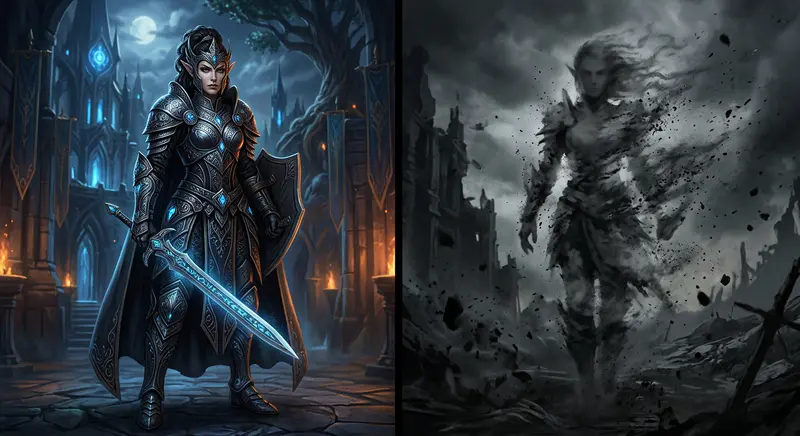
The 10-Message Amnesia: Why Most AI Characters Forget Who They Are
To fix the problem of AI character amnesia, we first need to understand why it happens. The culprit usually comes down to two major technical limitations found in most mainstream AI chatbots: restrictive character generation limits and shallow context windows.
First, consider the initial persona building stage. Many popular platforms limit your character definitions to a mere 500 or 1000 characters. When you are trying to establish a character's physical appearance, psychological profile, relationship to the user, and the world-building lore of their environment, 1000 characters is virtually nothing. You are forced to condense a rich history into a few bullet points, leaving the AI without enough foundational data to understand the nuances of the persona. It has to guess, and when AI guesses, it defaults to its baseline training, which is usually a helpful, generic assistant.
Second, and more importantly, is the "context window." Think of a Large Language Model's (LLM) context window as a conveyor belt of short-term memory. As your roleplay progresses, new messages are placed onto the belt. Because the belt has a fixed length (often around 4,000 to 8,000 tokens in standard models), as new messages are added, the oldest messages fall off the edge and are permanently forgotten. If your character's intricate lore was established at the very beginning of the chat, and your conversation pushes past that token limit, the AI quite literally no longer has access to that foundational information. The result? The AI forgets its lore, its motivations, and eventually, its entire personality.
The Art of the Character Card: Formatting for Maximum Memory
While we cannot magically change a platform's underlying token limits, we can optimize how we feed information to the AI. This is where the concept of the "Character Card" comes in. A Character Card is a condensed, highly optimized block of text designed to give the AI maximum context using the fewest possible tokens. By structuring your character's lore efficiently, you leave more room in the context window for actual roleplay.
Here are the best practices for structuring an AI persona for maximum character consistency:
- Prioritize Traits Over Prose: Instead of writing long, flowing paragraphs about how your character grew up in a small village, use concise, attribute-based formatting. Example: [Background: Orphaned in the Ember Village; Motivation: Seek revenge on the Fire Cult; Fear: Open flames]. This is much easier for an LLM to parse and retain than three paragraphs of prose.
- Use Dialogue Examples: One of the most powerful and underutilized tools in persona building is providing direct dialogue examples. If your character speaks in a archaic, formal tone, do not just say "speaks formally." Provide actual examples: [Example Dialogue: "Prithee, do not test my patience today, mortal, for my mercy is exceptionally thin."]. The AI will latch onto this pattern and mimic it flawlessly, significantly boosting behavioral consistency.
- Establish Hard Constraints: LLMs are designed to be agreeable, which is why your villainous characters often turn soft. You need to establish negative prompts or hard constraints within the persona. Add explicit rules like: [Rule: Character NEVER apologizes. Character ALWAYS speaks with condescension to strangers. Character is physically incapable of entering sunlight.] Formulating these as absolute rules helps prevent the AI from breaking character to accommodate the user.
- Adopt Standard Formats: Experiment with formats like W++ or JSON. Many advanced roleplayers use a pseudo-code format to define variables (e.g., Personality="Cold" + "Calculating" + "Secretly lonely"). While modern LLMs are getting better at reading plain text, structured formats still help in prioritizing distinct character traits.

Beyond Character Limits: How PopVid.ai Solves the Consistency Crisis
Even with the most perfectly optimized Character Card, you will eventually hit the wall of the context window in a long-running roleplay. If you want a story that spans weeks or months, formatting tricks simply aren't enough. You need better technology. This is where specialized platforms like PopVid.ai are changing the landscape for dedicated AI roleplayers.
PopVid.ai tackles the root causes of AI amnesia through two major technological advancements: massive context windows and seamless RAG (Retrieval-Augmented Generation) integration. First, by supporting long context windows, the "conveyor belt" of memory is drastically lengthened. Instead of forgetting the plot after 20 messages, the AI can retain thousands of back-and-forth interactions, allowing for slow-burn romances, intricate mysteries, and complex, multi-layered storylines without the character losing their identity.
But the true game-changer for AI roleplay character consistency is PopVid.ai's implementation of RAG technology. Retrieval-Augmented Generation acts as a permanent, searchable memory bank for your character. When you establish complex lore—such as a vast family tree, specific magical rules, or detailed histories from previous roleplay sessions—this information is stored in a dynamic database. During the roleplay, when you mention a specific topic, the system instantly retrieves the relevant lore from this database and silently feeds it to the AI alongside your message. This means your character can accurately recall a passing comment you made three months ago, or perfectly remember the specific rules of a fictional game you invented together, without keeping all of that data constantly jammed into the active context window.
By removing the anxiety of character limits and leveraging smart memory retrieval, PopVid.ai allows creators to build characters with massive, novel-length background settings. You no longer have to compromise on the depth of your world-building. Your AI persona can be as intricate and multifaceted as a protagonist in a bestselling fantasy series, and they will act like it from the first message to the thousandth.
Advanced Tips for Bulletproof Roleplay Consistency
Even with powerful tools like PopVid.ai at your disposal, maintaining a high-quality interactive narrative is a two-way street. How you interact with the AI greatly influences how well it maintains its persona over time. Here are a few advanced tips to employ during your actual roleplay sessions:
- Reinforce Lore Through Your Prompts: Do not rely entirely on the AI to carry the burden of memory. You can subtly remind the AI of its lore through your own actions. Instead of simply saying "I walk up to you," you might say, "I walk up to you, mindful of your deep-seated hatred for humans." This instantly re-anchors the AI to its core character trait before it generates its response.
- Use Out-of-Character (OOC) Directives: If you notice the AI starting to drift slightly from its established personality, do not be afraid to use OOC brackets to course-correct. A simple prompt like [OOC: Remember that your character is deeply suspicious of my motives and should act defensively here] can instantly snap the AI back into the correct mindset without ruining the narrative flow of the chat.
- Iterate and Update: A Character Card should not be a static document. As your roleplay evolves, your character will naturally grow. A rival might become a friend; a coward might become brave. Regularly update your foundational persona to reflect these earned character developments. This ensures that the AI's core instructions align with the current state of the story, preventing awkward regressions to their past selves.
Conclusion: Say Goodbye to Goldfish Memory
Achieving perfect AI roleplay character consistency has long been the holy grail of digital storytelling. For too long, creators have been forced to accept the compromise of shallow characters and forgetful bots due to strict token limits and rudimentary chat interfaces. But by understanding how LLM memory works, mastering the art of concise and structured Character Cards, and leveraging powerful, memory-focused platforms like PopVid.ai, you can finally build personas that actually remember their lore.
The era of the 10-message amnesia is ending. Whether you are crafting a gritty cyberpunk detective, a whimsical fantasy companion, or a deeply complex antagonist for a sprawling interactive epic, you now have the tools to ensure they remain true to their core identity. Dive in, expand your lore, and start experiencing AI roleplay exactly the way you designed it to be—immersive, consistent, and unforgettable.