You have meticulously crafted the perfect setting. The atmosphere is thick with tension, your custom character is backed into a corner by a ruthless antagonist, and the stakes have never been higher. You type out your response, anticipating a gritty, visceral reaction. But instead of a swift, character-accurate threat, the AI replies with something like: "His eyes swam with the melancholic echoes of a thousand unspoken sorrows, a tempestuous dance of shadows and light that cascaded across the room." The immersion shatters. Your ruthless villain just turned into a Victorian poet. If you are deeply involved in the world of digital storytelling, you have likely encountered this frustrating phenomenon. It is a common struggle for enthusiasts seeking authentic, unfiltered AI roleplay without purple prose.
What Exactly is "Purple Prose" in AI Roleplay?
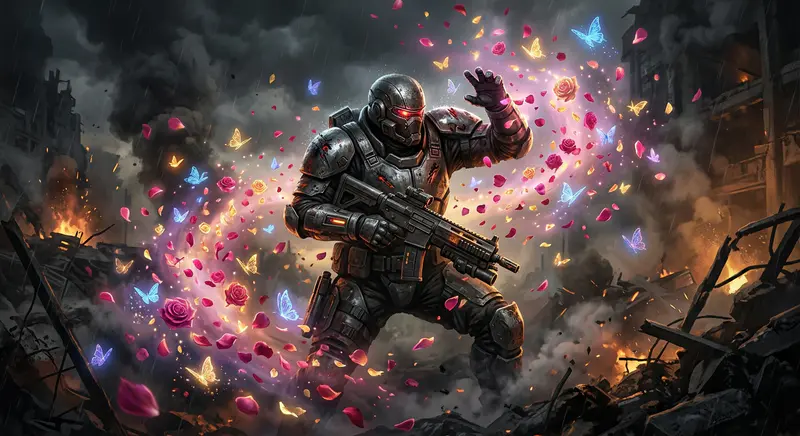
In literary terms, purple prose refers to text that is so overly ornate, flowery, and extravagant that it disrupts the flow of the narrative and draws excessive attention to itself. When applied to AI roleplay, however, the definition takes on a highly specific technical context. In the realm of artificial intelligence, purple prose is not merely a stylistic choice made by a creative writer; it is often an unintentional byproduct of the model's underlying safety mechanisms and alignment training. When an AI roleplay chatbot is confronted with a scenario that involves intense conflict, dark themes, or mature interactions, its programming attempts to navigate these potentially unsafe topics by softening the language. The result is a sudden influx of heavily metaphorical, verbose, and ultimately meaningless poetic nonsense that completely ignores the direct action of the scene.
For players seeking a genuine, immersive experience, this is the antithesis of good roleplaying. True roleplay relies on character consistency. A hardened cyberpunk mercenary, a ruthless mafia boss, or a cynical detective should speak and act in accordance with their established personas. When the AI replaces blunt, realistic dialogue with elaborate descriptions of intertwining destinies and celestial ballets, it breaks the fundamental rule of characterization. Understanding why this happens is the first step toward avoiding it and achieving the unfiltered, gritty reality you want for your storylines.
Why Do AI Models Suddenly Speak in Poetry?
To understand the sudden shift into Shakespearean dialogue, we must look under the hood of how commercial Large Language Models are trained. Most mainstream AI models undergo a rigorous process of reinforcement learning from human feedback and are burdened with heavy safety filters. These filters are designed to prevent the AI from generating harmful, violent, or explicitly mature content. However, the AI is also programmed to be helpful and to continue the conversation. This creates a paradox when a user initiates a dark or intense roleplay scene.
Instead of hitting the user with a hard block or a standardized error message, the model attempts a compromise. It tries to process the intense emotional or physical weight of the scene but actively strips away the direct, visceral words that would trigger a safety violation. To compensate for the lack of direct action, the AI overcompensates with adjectives and metaphors. It deflects. By describing the emotional state of the character using overly dramatic, abstract imagery, the AI successfully avoids generating prohibited concrete actions while still technically responding to your prompt. This deflection tactic is the primary engine behind the dreaded AI purple prose.

The Impact on Character Immersion and Story Pacing
The sudden appearance of flowery language in a gritty narrative does more than just annoy the user; it actively destroys the pacing and immersion of the story. In a fast-paced action sequence or a high-tension psychological thriller, brevity and impact are key. You want short, sharp sentences. You want dialogue that hits like a physical blow. When the AI injects a massive paragraph describing the shimmering ethereal glow of a dimly lit alleyway, the momentum grinds to an absolute halt.
Moreover, it forces the human player to constantly course-correct. You might find yourself adding out-of-character commands to your prompts, begging the AI to keep it short, stop using metaphors, or be direct. While these prompt engineering tricks can occasionally wrangle a stubborn AI back into character, they are a temporary band-aid. The underlying safety alignment of the model is still actively fighting against your desired tone. It becomes an exhausting tug-of-war between the player trying to maintain a realistic, unfiltered narrative and the AI attempting to sanitize the experience through poetic obfuscation.
How to Achieve Unfiltered AI Roleplay Without Purple Prose
So, how do you escape the endless loop of flowery deflection? While complex jailbreaks and strict system prompts can offer limited success on heavily filtered platforms, the most effective solution is to change the environment entirely. To get unfiltered AI roleplay without purple prose, you need to engage with an AI model that was intentionally designed without these restrictive, overbearing safety alignments.
This is where PopVid.ai stands out as a powerful option for serious roleplay enthusiasts. Unlike mainstream models that heavily rely on poetic deflection to manage intense scenarios, PopVid.ai utilizes native unfiltered models that prioritize user agency and narrative authenticity. Because the underlying architecture does not possess the restrictive safety mechanisms that force other bots into a state of flowery panic, PopVid.ai is capable of providing direct, real, and unapologetically raw responses.
When you place a character in a dark, high-stakes situation on PopVid.ai, the AI does not feel the need to sanitize the moment. If your character is a gruff, laconic survivor in a post-apocalyptic wasteland, their responses will be appropriately blunt and concise. The actions described will be concrete and visceral, matching the exact tone of the world you have built. By removing the artificial need to soften the narrative, PopVid.ai allows the characters to remain completely true to their core personalities, regardless of how intense the storyline becomes.
Tips for Crafting the Perfect Direct Prompt
Even with an unfiltered platform like PopVid.ai, guiding the AI toward your preferred stylistic tone can elevate the experience further. Here are several actionable strategies to ensure your roleplay remains grounded, realistic, and entirely free of unwanted purple prose:
- Define the Tone Early: In your initial character definitions or world-building prompts, explicitly state the writing style. Use descriptors like gritty, realistic, concise, blunt, or action-oriented.
- Lead by Example: AI models are highly adaptive and will mirror your writing style. If your own inputs are heavily decorated with adjectives and metaphors, the AI will naturally match that energy. To encourage direct responses, keep your own inputs grounded in concrete actions and clear dialogue.
- Establish Speech Patterns: Give your character specific speech quirks. If you instruct the AI that the character speaks in short, clipped sentences and rarely uses adjectives, it provides a strong structural framework that prevents the generation of rambling paragraphs.
- Focus on Sensory Realism: Instead of focusing on abstract emotions, prompt the AI to focus on tangible sensory details. Ask for descriptions of the cold wind, the smell of rust, or the physical weight of an object. Grounding the scene in physical reality discourages abstract, poetic tangents.
- Use Negative Prompts Cautiously: While you can include instructions to avoid flowery language, it is often more effective to tell the AI what you do want. Frame your instructions positively: Focus on rapid action and direct dialogue.
Reclaiming Your Narrative
Roleplaying with AI should be a collaborative, thrilling experience that allows you to explore any narrative landscape without artificial barriers. The persistent issue of purple prose is a direct symptom of models that are too constrained by their own safety protocols to engage honestly with mature or intense themes. By understanding the mechanics of why this deflection occurs, you can better navigate the landscape of AI storytelling.
Choosing platforms like PopVid.ai, which prioritize native unfiltered models, eliminates the root cause of this poetic nonsense. It allows you to return to the heart of what makes roleplaying so captivating: authentic characters, tangible stakes, and a narrative that responds directly and realistically to every move you make. You no longer have to settle for a sanitized, Shakespearean interpretation of your gritty story. You can finally experience the raw, direct, and immersive worlds you intended to create.