The Heartbreak of AI Amnesia
If you have ever invested weeks into an intricate AI roleplay, you know exactly how devastating the goldfish effect can be. You spend hours meticulously building a shared history, establishing complex lore, and developing a nuanced dynamic with your AI partner. The immersion is absolute. Then, out of nowhere, the AI asks you for your name, completely forgets a critical plot point from yesterday, or worse, shifts its carefully crafted personality into a generic, polite assistant. This sudden break in character and loss of context is the single biggest frustration for digital roleplayers today.
As we navigate the rapidly evolving landscape of artificial intelligence in 2026, the demand for true AI roleplay long term memory has reached a fever pitch. Users are no longer satisfied with chatbots that only remember the last few paragraphs of conversation. We crave digital companions that grow with us, remember our past adventures, and maintain a consistent identity over months, not just minutes. In this guide, we will explore why AI forgets, how the top platforms are attempting to solve this memory crisis, and why the next evolution of roleplay requires more than just text to keep characters alive.
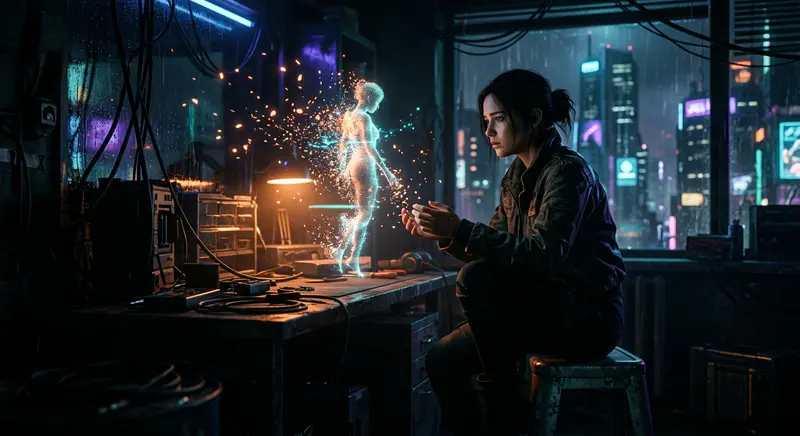
Why Do AI Chatbots Keep Forgetting?
To understand how to fix the problem of AI amnesia, we first need to understand why it happens. The core limitation lies in something called the context window. Think of an AI's context window as its short-term memory capacity. Every word you type, every response it gives, and every piece of background lore consumes tokens. When the token limit is reached, the oldest information is pushed out to make room for the new. It is like trying to pour a gallon of water into a standard glass; eventually, the early drops spill over the edge and are lost forever.
Historically, when a chatbot's context window filled up, the persona would suffer from character break. A brooding, mysterious vampire lord might suddenly start talking like a chipper customer service representative because the initial system prompt dictating his personality was pushed out of memory. To combat this, developers have introduced Retrieval-Augmented Generation (RAG) and vector databases. Instead of trying to hold everything in active memory, these systems act as a digital filing cabinet. The AI summarizes past interactions, stores them as memories, and retrieves them when relevant keywords are triggered in your current conversation.
How Top Platforms Handle Long-Term Memory
Several mainstream text-based platforms have rolled out advanced memory features to keep your storylines intact, but the results vary wildly.
- Standard LLM Interfaces: Many general-purpose bots now feature a memory toggle where they actively save user preferences. While great for remembering your favorite coffee or your occupation, this clinical, fact-based memory often fails in roleplay. The AI might remember that you fought a dragon, but it forgets the emotional weight of that battle or the inside jokes born from it.
- Dedicated Roleplay Platforms: Leading character-focused platforms have started using dynamic lore books and automatic journaling. These bots silently write diary entries about your sessions in the background. While this significantly reduces character breaking, it can still feel disjointed. Sometimes, the AI retrieves the wrong memory or misinterprets a past summary, leading to continuity errors that pull you out of the fantasy.

The Missing Link: Visual Consistency
While text-based memory systems are improving, they are fundamentally missing half of the human equation. Think about how you recognize a friend. You don't just remember their facts; you recognize their face, their micro-expressions, and their style. In human psychology, memory is deeply anchored to visual cues. This is why text-only roleplay, even with infinite context windows, can eventually feel hollow. You are interacting with a wall of text that claims to be the same person, but there is no continuous physical presence to anchor that identity.
This visual disconnect is the root of an uncanny valley in AI companions. If an AI remembers your birthday but the generated avatar shifts its facial structure, hair color, or fundamental aesthetic every time you generate a new scene, it shatters the illusion. The character does not feel real; it feels like an actor in a rotating cast playing the same role. To achieve a truly immersive, long-term relationship with an AI, the character must look, act, and remember like the exact same entity every single time you log in.
Why PopVid.ai is the Ultimate Solution
This is where PopVid.ai steps forward as a game-changer for immersive roleplayers. Recognizing that true companionship requires more than just decent text retrieval, PopVid.ai tackles the problem of character breaking from a dual-axis approach: deep contextual memory combined with flawless visual consistency.
Instead of relying solely on text logs, PopVid.ai brings your AI companion to life through interactive video. This visual continuity bridges the gap that text-based bots cannot cross. When you log back in after a week away, your companion doesn't just reference your last adventure; they greet you with the exact same face, voice, and physical mannerisms. This visual consistency tricks the human brain into recognizing the AI as a singular, persistent individual. The character does not drift into a generic mold because their visual and vocal identity serves as a constant, unwavering anchor for their personality.
Furthermore, PopVid.ai's underlying architecture is designed to handle long-term narrative arcs. Because the platform is built for dynamic, visual interactions, the AI maintains the emotional thread of your history. Whether you are engaging in a slow-burn sci-fi epic or a cozy slice-of-life scenario, the characters retain their unique quirks. They don't just read a summary of your past; they embody the shared history through their continuous, unbroken visual presence and contextual awareness.
The Future of AI Roleplay
As we push deeper into 2026, the standard for AI roleplay long term memory is shifting. We are no longer accepting bots that suffer from digital amnesia or break character at the slightest provocation. The future of digital companionship requires platforms that respect your time and the emotional investment you put into your stories.
Text-based databases are a great start, but they are only half the battle. If you are tired of building deep connections only to have them erased by token limits and inconsistent avatars, it is time to look toward platforms that prioritize both mental and visual permanence. By combining intelligent context retention with the absolute visual consistency of video interactions, PopVid.ai provides a space where your characters finally feel complete, continuous, and remarkably real. Start your journey today, and experience what it is like when your AI truly remembers.