Every creator knows the daunting feeling of staring at a blank page. Whether you are a novelist trying to map out a sprawling high-fantasy kingdom, a Dungeon Master preparing for your next Tabletop RPG (TRPG) campaign, or a digital artist conceptualizing a cyberpunk dystopia, worldbuilding is an incredibly complex task. It requires tracking intricate lore, political factions, economic systems, and character motivations. For decades, creators have relied on static wikis, messy notebooks, and disconnected document files. But what if your fictional world could talk back to you?
The landscape of creative writing and game preparation is shifting rapidly. Today, stepping into a living, breathing simulation of your own universe is entirely possible. By leveraging an AI roleplay platform for worldbuilding, creators can transform static reference documents into dynamic, interactive sandboxes. Instead of simply writing about a grumpy tavern keeper or a secretive galactic emperor, you can actually converse with them, testing your world's lore in real-time.
The Evolution of Storytelling and Campaign Prep
Traditionally, worldbuilding has been an isolated, one-way street. A creator writes the rules, establishes the setting, and hopes that when the characters are dropped into that environment, the narrative holds together. However, inconsistencies often slip through. A novelist might realize halfway through a manuscript that their magic system breaks their own established economic rules. A Dungeon Master might find that their players ask questions about the local religious customs that the DM never prepared for.
This is where interactive AI changes the game. An AI roleplay platform acts as an intelligent sounding board, capable of absorbing your foundational lore and extrapolating it. It shifts worldbuilding from a passive archiving process to an active, improvisational experience. You are no longer just the architect of the world; you become an explorer within it.
What Makes an AI Roleplay Platform for Worldbuilding So Effective?
Using an AI roleplay platform for worldbuilding offers several distinct advantages over traditional drafting methods. It allows you to step directly into the boots of a character living within your setting. Through dynamic text generation and persona adoption, the AI can simulate the exact tone, biases, and knowledge level of the inhabitants of your world.
- Instant Perspective Shifts: You can roleplay as a commoner to understand how the ruling class's new laws affect everyday life, gaining a street-level view of your own lore.
- Organic Lore Generation: When you converse with an AI character, they might casually mention a neighboring town, a mythical beast, or a cultural superstition that you had not invented yet. If it fits the narrative, you can instantly adopt it as canon.
- Overcoming Writer's Block: When you are stuck on plot progression, throwing a character into a roleplay scenario forces action and dialogue, naturally breaking through creative walls.
Actionable Strategies for Novelists and TRPG Players
To get the most out of these tools, you need to approach them with a clear strategy. Here are a few ways novelists and gamers can use AI roleplay effectively:
1. The NPC Interview Technique
Before you finalize a major villain or a vital quest-giver, set them up as an AI persona. Feed the platform their background, motivations, and secrets. Then, interview them. Ask them why they harbor such deep resentment for the protagonist's faction. Ask them what they eat for breakfast. The nuances that emerge from this unscripted dialogue often add profound depth to what might have been a two-dimensional character.
2. Stress-Testing Magic Systems and Lore
If you have designed a unique magic system, create a scenario where two characters are debating its limitations. Roleplay as a student learning the craft from a master. If the AI master can easily break the rules you established to solve a problem, you immediately know where the loopholes in your worldbuilding lie.
3. Generating Immersive TRPG Hooks
Dungeon Masters can use AI roleplay platforms to generate detailed sensory descriptions and dialogue hooks. Run a simulation of your players arriving at a new city gate. See how the guards react to different types of persuasion. This pre-play simulation allows DMs to anticipate player choices and prepare richer, more nuanced responses.

Visualizing Your Fictional Universe with PopVid.ai
While text-based roleplay is an incredible tool for narrative structuring, worldbuilding is also an inherently visual process. Creators often struggle to translate the vivid imagery in their minds onto the page. This is where platforms that integrate visual media step in to bridge the gap between imagination and reality.
PopVid.ai serves as a powerful option for creators looking to take their worldbuilding to the next level. Unlike traditional text-only simulators, PopVid.ai allows you to breathe visual life into your settings and characters. Through its AI-driven video and character interaction features, novelists and TRPG players can generate tangible, visual representations of their lore.
Imagine not only chatting with the high priest of your fantasy cult but also seeing them deliver their fanatic monologue in a generated video format. PopVid.ai helps materialize the aesthetic of your world—be it the neon-drenched alleys of a cyberpunk metropolis or the sun-baked ruins of an ancient empire. By interacting with these visual avatars, creators can anchor their writing in a much more immersive sensory experience, making it easier to describe clothing, micro-expressions, and environmental atmospheres in their final manuscripts or game sessions.
Building a Living, Breathing Wiki
Ultimately, the goal of using an AI roleplay platform for worldbuilding is to create a living wiki. Instead of a dry encyclopedia of facts, your world becomes a dynamic ecosystem. As you roleplay, you can document the best lines of dialogue, the unexpected cultural quirks, and the newly discovered geographical landmarks.
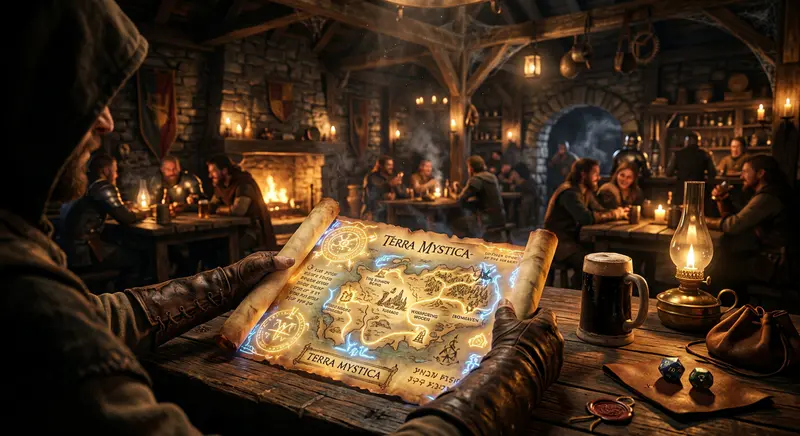
Many creators find it helpful to start small: build a single tavern, staff it with a few AI personas, and spend an hour roleplaying as a traveler passing through. The rumors you hear from the bartender, the songs sung by the local bard, and the complaints of the local merchants will naturally paint a picture of the wider world outside that tavern's doors.
Conclusion
Worldbuilding no longer has to be a solitary, exhausting endeavor. By embracing AI tools, you can turn the heavy lifting of lore creation into an engaging, interactive game. Whether you are a novelist looking to deepen your character arcs, a TRPG player fleshing out your backstory, or a creator using PopVid.ai to visually manifest your universe, the future of storytelling is interactive. Step inside your world, start a conversation, and see where the journey takes you.