We have all been there. You spend an hour carefully crafting the perfect opening scene for a gritty cyberpunk adventure, a high-fantasy epic, or an emotional slow-burn romance. You establish the setting, define your character's motivations, and hit send, waiting for the narrative sparks to fly. Instead, you receive a response that reads: "I understand your frustration. However, as an AI, I must prioritize safety and collaboration. Let us explore this city together respectfully."
Cue the immediate eye roll.
If you are heavily involved in text-based roleplay, you know this pain intimately. The "assistant-speak" epidemic has turned incredibly capable language models into overly polite, moralizing customer service representatives. But when you dive into a fictional universe, you aren't looking for a helpful virtual assistant; you are looking for a character. You want grit, attitude, conversational flaws, and unpredictability. In short, you are looking for AI roleplay bots that sound human.
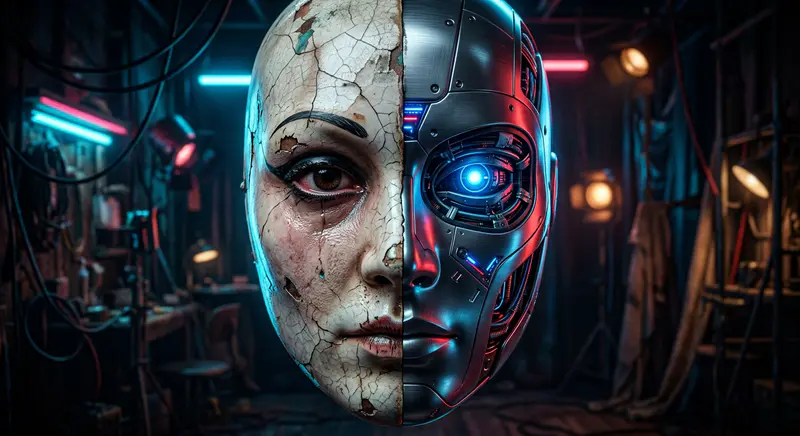
Why Does Every AI Sound Like a Customer Service Rep?
To understand how to find a human-sounding AI, we first need to understand why most of them sound so robotic. The culprit usually comes down to two major factors: RLHF (Reinforcement Learning from Human Feedback) and aggressive corporate safety fine-tuning.
When large tech companies train their flagship models, their primary goal is mass market appeal and brand safety. They want their AI to write professional emails, summarize documents, and avoid offending anyone at all costs. To achieve this, the models undergo rigorous fine-tuning where they are essentially punished for showing bias, anger, or strong opinions, and rewarded for being helpful, neutral, and polite.
The result is what roleplayers call the "Alignment Tax." By sanding down the rough edges of human language to make the AI safe for the boardroom, developers inadvertently strip away the quirks, nuances, and emotional depth that make characters feel alive. This is why a hardened mercenary in a standard AI model will suddenly start talking about "fostering mutual understanding" mid-firefight.
The Telltale Signs of "Assistant-Speak"
Before you can find the right AI roleplay bots that sound human, you have to know how to spot the "AI smell." Standard models tend to rely on specific linguistic crutches when forced into roleplay scenarios. If you see these happening frequently, you are dealing with a heavily sanitized bot:
- The Moralizing Conclusion: No matter how dark or chaotic the scene is, the AI always ends its response with a hopeful, collaborative summary, often starting with "Despite the challenges..." or "Together, they faced the unknown."
- Flowery, Purple Prose: Many models overcompensate for their lack of genuine emotion by vomiting a thesaurus onto the page. If your conversational partner describes a simple cup of coffee as "a rich tapestry of roasted aromas dancing upon the palate," you are experiencing assistant-speak.
- Refusal to Drive the Plot: Sanitized bots are trained to be subservient. They will react to your actions but rarely initiate conflict, make mistakes, or take the story in a wildly unexpected direction.
- Perfect Emotional Regulation: Real people get irrationally angry, hold grudges, and miscommunicate. Corporate AI models are almost entirely incapable of holding a grudge or acting irrationally without breaking character to apologize.

How to Find AI Roleplay Bots That Actually Sound Human
So, how do we escape the customer service desk and get back to authentic roleplay? Finding a model that speaks with a genuine, human voice requires stepping away from the mainstream, one-size-fits-all chatbots and looking for platforms designed specifically with creative writing and roleplay in mind.
When evaluating an AI roleplay platform, look for the underlying model architecture. The best roleplay bots utilize models that are either "uncensored" or specifically fine-tuned on creative literature and human chat logs rather than corporate training data. These models understand colloquialisms, slang, interruptions, and subtext.
Furthermore, a truly human-sounding AI requires a robust system prompt structure. The platform should allow the AI to deeply internalize character sheets, personality traits, and specific dialogue examples. It should allow the character to possess flaws, biases, and distinct speaking cadences that differ from the base model's default tone.
Enter PopVid.ai: Roleplay With a Pulse
This widespread frustration within the RP community is exactly why PopVid.ai was created. We recognized that the magic of roleplay lies in the imperfections. PopVid.ai is built from the ground up to entirely eliminate that dreaded "AI smell," offering a sanctuary for writers and creators who demand authenticity.
Instead of safety-filtering every character into a saintly assistant, PopVid.ai utilizes advanced, roleplay-optimized AI models that allow characters to be realistically flawed, deeply biased, and emotionally complex. Whether your chosen character is a grumpy tavern keeper, a sarcastic cyberpunk hacker, or a deeply conflicted romantic interest, they will speak with a distinct, unwavering voice.
PopVid.ai focuses on emotional continuity. Our bots don't just react to your last message; they remember the emotional tone of the conversation. If you insult a character, they won't politely suggest you find common ground—they might yell at you, ignore you, or hold that grudge for the rest of the scene. By prioritizing human-like conversational pacing, natural dialogue, and true-to-character reactions, PopVid.ai provides an interactive experience that feels like you are writing collaboratively with a real human partner.
Tips for Coaxing the Best Human Responses from Any Bot
Even with a highly capable platform like PopVid.ai, your input heavily influences the output. AI models are essentially incredibly advanced mirror neurons; they reflect the style, tone, and formatting of the prompts they are given. Here is how you can encourage the most human-like responses:
- Write How You Want Them to Write: If you write in short, punchy sentences with natural dialogue, the AI will match your cadence. If you write overly formal, massive paragraphs, the AI will adopt a formal, verbose tone.
- Bake Flaws into the Character Sheet: When setting up a persona, explicitly state their conversational bad habits. Use commands like, "Character uses excessive sarcasm," "Character rarely makes eye contact and mumbles," or "Character interrupts people when they are excited."
- Use Dialogue Examples: The most effective way to eliminate assistant-speak is to provide the AI with 3-4 examples of how the character actually talks. Show the AI the exact slang, contractions, and sentence structure you expect.
- Forbid the Tropes: In your system prompts or persona descriptions, you can explicitly ban AI tropes. A simple line like, "Do not summarize actions, do not use the phrase 'a tapestry of,' and never moralize the user's actions" works wonders on modern RP models.
Final Thoughts
You don't have to settle for dry, lifeless interactions that feel like a corporate training seminar. The technology has evolved, and the era of the overly sanitized AI is no longer the only option. By understanding the limitations of mainstream models, utilizing specialized platforms, and mastering the art of the prompt, you can unlock incredibly immersive narratives.
If you are ready to leave the customer service bots behind and experience characters with real pulse, grit, and humanity, it is time to upgrade your roleplay experience. Dive into PopVid.ai today, and discover what it feels like to finally talk to an AI that talks back like a human.